



Are We at the Crossroads of Journalism, Truth, and Democracy?
By Jack Pagano
Jack@thetampapost.com
Sarasota, FL. As the late baseball legend Yogi Berra famously quipped, “When you come to a fork in the road, take it.” Today, many are wondering whether journalism, truth, and democracy have arrived at that very fork.
That question took center stage at Sarasota’s Selby Library, where a group of seasoned experts from the Poynter Institute gathered to examine the state of modern media. Neil Brown, President and Chairman of Poynter, commanded the room with sharp observations and decades of experience—experience that includes leadership roles in newsrooms that earned six Pulitzer Prizes. Moving seamlessly between anecdotes and analysis, he laid out the challenges facing journalists and news consumers alike. At one point, he distilled the moment with a simple but pointed remark: “It is a very complicated world, and frankly, more than half of Americans find their news sources irrelevant to them, and the news wears them out.”
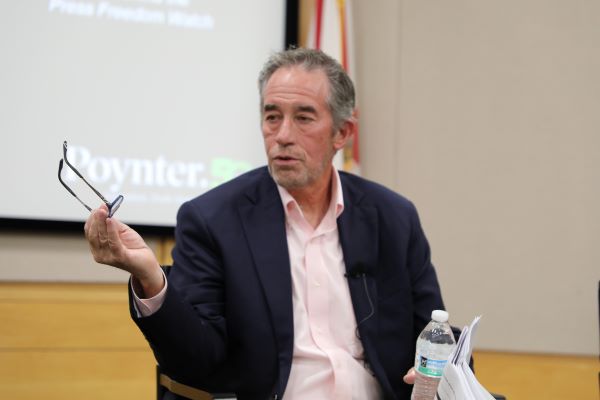
Selby Library, Sarasota, Fl. Poynter Institute President and Chairman, Neil Brown talks to an audience about the future of Journalism, Truth and Democracy. March 24, 2026 (photo by Jack Pagano)
Brown’s observation reflects a broader reality: sustained attacks, intimidation, and lawsuits against the media increasingly threaten the ability of news organizations to do their essential work. Evidence of this isn’t hard to find. Current global conflicts, including the war in Iran, and unprecedented restrictions imposed by the Pentagon have created an environment where press access is more limited than ever.
Selby Library, Sarasota, Fl. Poynter Institute President and Chairman, Neil Brown, Editor-in-Chief of PolitiFact Katie Sanders, and Moderator Aaron Sharockman explain that Journalism, Truth, and Democracy are at a fork in the road. March 24, 2026 (photo by Jack Pagano)
The contrast between today’s constraints and past openness is stark. This reporter worked in the Pentagon press pool as a Fox News Pentagon correspondent in the late 1990s. At that time, there were no restrictions—no rules that limited your ability to tell the military stories the American people needed to hear. That is not the case today. What was once a collaborative environment between the press and the Department of Defense has evolved into one defined by tighter control, fewer briefings, and limited access to frontline information.
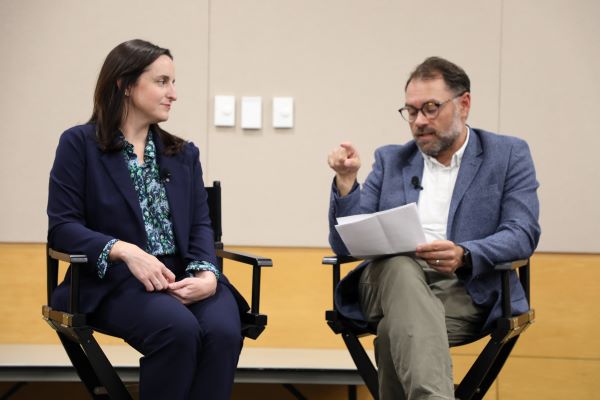
Selby Library, Sarasota, Fl. Editor-in-Chief of PolitiFact Katie Sanders and Moderator Aaron Sharockman discuss the viable solutions in Journalism, Truth, and Democracy. March 24, 2026 (photo by Jack Pagano)
A Growing Concern Over Regulatory Pressure
Katie Sanders, Editor-in-Chief of PolitiFact, expanded on Brown’s comments, focusing on concerns about how regulatory tools—particularly those of the FCC—can be used in ways that affect media outlets. She discussed how political pressure on an independent regulatory agency can influence which news organizations face scrutiny, and how easily such mechanisms can be turned against outlets that fall out of favor with those in power. She warned, “Once these freedoms are lost or taken away, it’s not that attractive to restore them and invite more scrutiny, more access, more records from the next administration.” Her point was clear: once government oversight expands into the editorial or operational space of news organizations, reversing that expansion becomes extremely difficult. As she put it, the toothpaste is out of the tube—and getting it back in is nearly impossible.
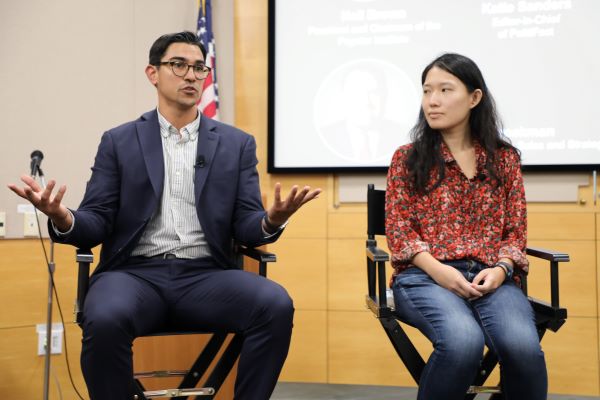
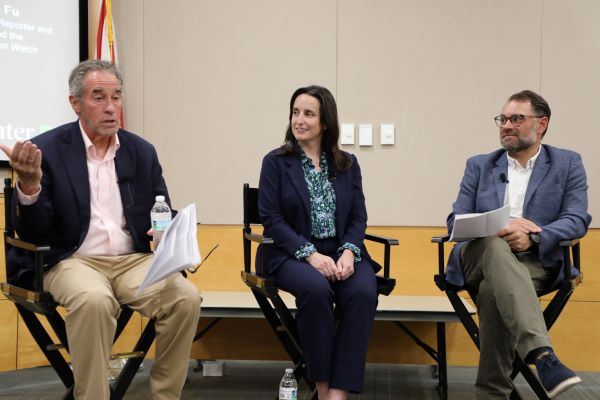
Selby Library, Sarasota, Fl. Director of MediaWise and Poynter faculty Alex Mahadevan and Poynter’s Media Reporter Angela Fu explain the social media challenges in Journalism, Truth, and Democracy. March 24, 2026 (photo by Jack Pagano)
The Battle Over Truth
At the core of the discussion was a single word: truth. The fog surrounding truth has grown thicker, making it increasingly difficult for the public to distinguish fact from fiction.
Alex Mahadevan, Director of MediaWise and Poynter faculty, captured the room’s attention when he addressed the accelerating spread of misinformation: “Falsehoods spread a lot faster than the truth. We are in an ecosystem built for falsehoods to thrive.” His comments underscored a troubling reality: the digital landscape rewards speed, outrage, and emotional reaction—often at the expense of accuracy.
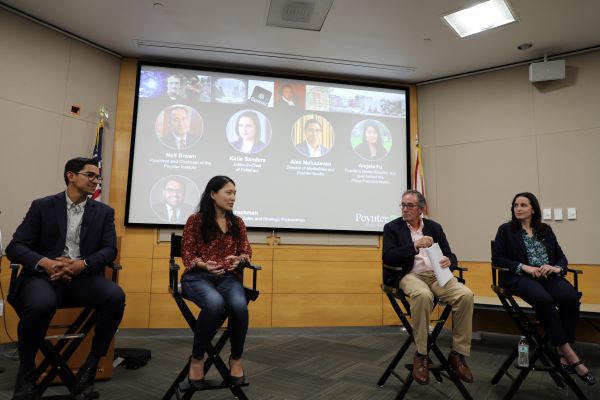
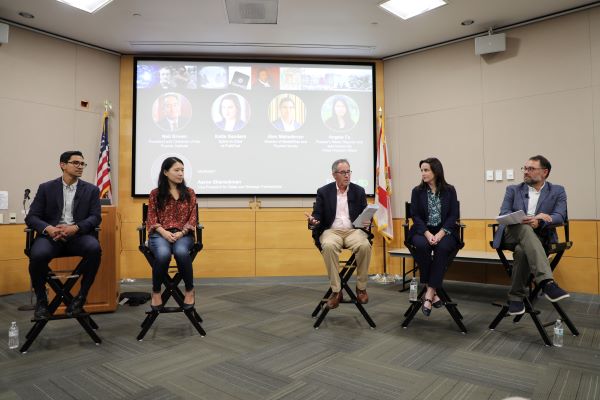
Selby Library, Sarasota, Fl. Poynter’s Institute all-star team came to Sarasota to discuss current events in Journalism, Truth, and Democracy. March 24, 2026 (photo by Jack Pagano)
Is There Hope for a Better Future?
Despite the sobering tone, the conversation at Selby Library was not without optimism. The panelists emphasized that journalism has weathered storms before. Its survival has always depended on two forces: A public that values credible information, and Journalists committed to pursuing truth despite obstacles.
The crossroads are real, and the stakes are high. But the path forward—whichever fork the nation chooses—will be shaped by the collective will to defend transparency, accountability, and the free flow of information.
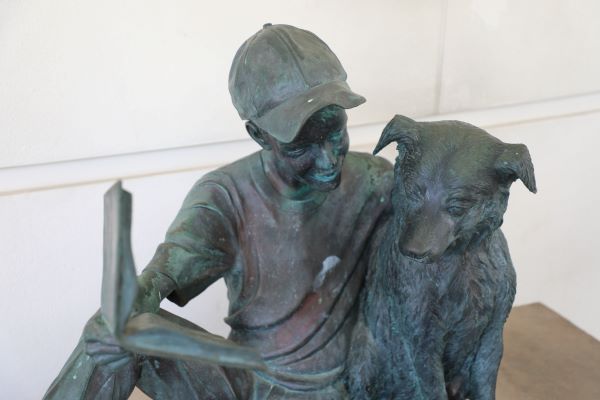
Selby Library, Sarasota, Fl. Outside the library, a poignant statue of a boy reading to his dog. March 24, 2026 (photo by Jack Pagano)
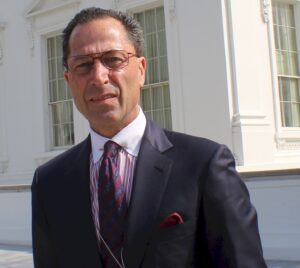 Jack Pagano is a retired Army field grade officer with many decades of Information Operations experience and currently working remotely in the USA as COO/Strategist for one of Afghanistan’s biggest Radio/TV networks. His current mission is getting out Afghan journalists he trained, and mentored who are stuck, stranded under the Sharia-driven Taliban.



More Stories
Are You Asking AI the WRONG Questions? 5 Power Prompts That Can Help You Learn Faster
Data Center Electric expenses continue to spread across state lines.
How to Get People to Like You: 5 Rules That Really Work