





YOUR BUILT-IN “PREDICTION MACHINE”
How To Use Your Mind To See The Future
By Matt DiMaio
Perhaps some of you read the title about seeing the future and did a double take. No, I am not writing about anything metaphysical here. As always, I’ll be covering something practical that anyone can understand… and apply… to get better results in your own life.
There’s a meme I’ve noticed that’s been making the rounds on social media recently:
“Not every lion that chases an antelope catches one.
But every lion that catches an antelope was chasing one.”

It got me thinking. I hope to get you thinking about it now too.
The lion can watch. It can wait. But at some point, if it wants to eat, it has to move.
You and I face a similar choice. We can wish for a better future. We can talk about what we want. We can wait until we feel ready.
But to give ourselves a chance of achieving something, we must take action.
And often, that action begins with a picture in our minds.
Your “Prediction Machine”
Your mind looks ahead. A useful way to describe one aspect of how your brain works is to think of it as a kind of “PREDICTION MACHINE.”
Researchers studying predictive processing explore how the brain uses past experience and incoming information to anticipate what comes next and adjust when expectations don’t match reality.
You experience that anticipation every day without giving it any conscious thought. You reach for a familiar door handle expecting it to turn. You hear the beginning of a familiar phrase and anticipate the ending.
When it comes to your goals, consider the expectations you have about the outcomes.
Suppose you want to learn a new skill, but you keep telling yourself, “I’ll never understand this.” You may put off practicing or stop at the first difficulty. That gives you fewer opportunities to improve.
Now suppose you approach the same task thinking, “I haven’t learned this yet. What’s one part I can practice today?”
That question gives you somewhere to begin.
Clearly, your thoughts don’t control every circumstance. Other people, resources, timing, and plain old setbacks matter. But your expectations will influence whether or not you give yourself a chance.
A Gentle Warning
You may feel that you already know what you’re about to read. Fair enough. But ask yourself: “Am I actively using it in my own life?”
Many everyday actions happen on autopilot. When you’re working toward a goal, practice choosing your actions on purpose… with a clear purpose in mind.
Put A Useful Picture In Your Head
Suppose you want to become a more confident public speaker. It is helpful to imagine yourself standing before a group, speaking clearly, and feeling comfortable.
Good. Now you have a mental destination.
Now picture yourself practicing your opening aloud. See yourself standing up, taking a breath, and delivering the first few sentences.
Then stand up and do it.

The picture of success helps you choose a direction. The picture of the next step helps you decide what to do.
The same principle applies to learning. Imagine yourself passing the exam. Then picture yourself opening your notes, studying one section, closing the notes, and explaining what you learned in your own words.
Want a closer relationship with someone? Imagine a warm conversation. Then make the call and give that person your attention.
Want to write a book? Picture the finished book. Then picture yourself sitting down and writing the first page.
Suppose you want to build a home-based business. You might imagine serving customers, setting your own schedule, and earning income from work you enjoy.
Now bring that picture down to a practical next step. What will you offer? Who could benefit from it? Picture yourself having a conversation with a potential customer to learn what they need. Then arrange that conversation. Each action helps you discover whether your idea can work in the real world.
If you don’t form clear mental images, describe the goal in words. Write down what you want and the next action you will take. You can still give your attention a clear, specific target.
How An Idea Became A Book
On May 23, 2026, while giving an online presentation about why now is the best time in history to write a book, I came up with the idea for my newest book, The 48-Hour Author.
I had already published four books, two of which reached #1 New Release on Amazon. However, at that moment, this new book was just an idea. There were no pages completed, not even a detailed outline written. No artwork for the cover. In fact, I didn’t even have the actual book title yet.
I was only beginning to imagine the possibility. Then I went to work making it real.
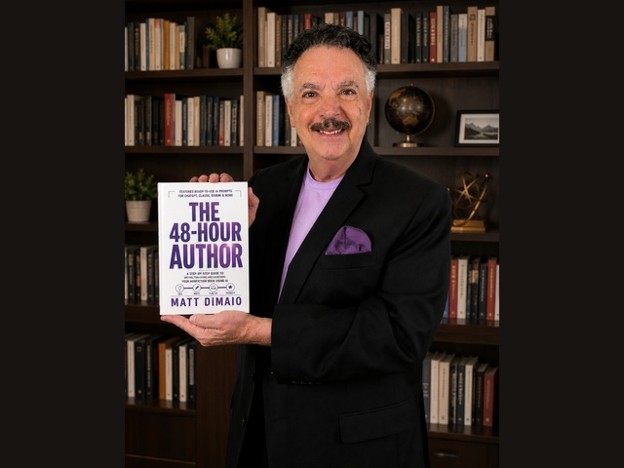
In about 6 weeks, by July 5, the writing, formatting, editing, cover design, and prelaunch promotion were complete. I launched the book on Amazon on Wednesday, July 8. Five days later, on Monday, July 13, it reached #1 New Release on Amazon.
The full title is “THE 48-HOUR AUTHOR – A Step-By-Step Guide To Write Publish And Launch Your Nonfiction Book Using AI.” In it, I show how fast and easy it is to create a good book today, compared to any other time in history. I worked on it an hour or two at a time over those weeks, putting in about 48 hours in total.
Imagining the book gave me a direction. Taking action gave me a book.
There was no guarantee it would reach #1 New Release, or that it would even sell at all. But leaving the idea in my head would never have put it into a reader’s hands.
Focus Your Energy On The Next Step
You don’t have to know every step before you begin. You do need to choose a useful step you can take.
Ask yourself three questions:
- What do I want to accomplish?
- What action would move me closer?
- When will I take that action?
Make the answer specific. “Work on my book” is easy to postpone. “Write the opening page at nine tomorrow morning” gives you a clear appointment with yourself.

As you act, pay attention to what happens. If something works, build on it. If it doesn’t, use what you learned to adjust your approach. An unsuccessful attempt can still give you useful information.
You can also begin before you feel completely confident. Completing a small step gives you evidence that you can make progress. If you’ve been expecting yourself to fail, completing one useful step gives you a reason to reconsider. You now have a small success to build on.
So choose something you want to accomplish. Put a useful picture in your head. Focus your attention on the next step. Then take it.
The lion doesn’t catch every antelope it chases.
But it has to start moving to have a chance.

Matt DiMaio is an author, educator, speaker, and Rapid Learning Specialist who has spent more than four decades teaching people how to learn faster, remember more and improve their personal effectiveness. He is the creator of the Be Smarter Faster YouTube channel and author of The 48-Hour Author, along with several books on learning, memory, and personal development. Matt@TheTampaPost.com
Websites:
YouTube – www.youtube.com/BeSmarterFaster
My 5 Books – www.Amazon.com/author/mattdimaio
NO Cost/LOW Cost training & courses – www.tinyurl.com/TGDMatt
Facebook: www.Facebook.com/therealmattdimaio
LinkedIn: www.Linkedin.com/in/mattdimaio


More Stories
For the MIC, Every Day is Veterans Day
Small Minds Vs. Great Minds… The Choice Is Yours
Want to Raise More Confident Kids? Start Here.